

2026 Lexus ES vs 2026 Toyota Camry
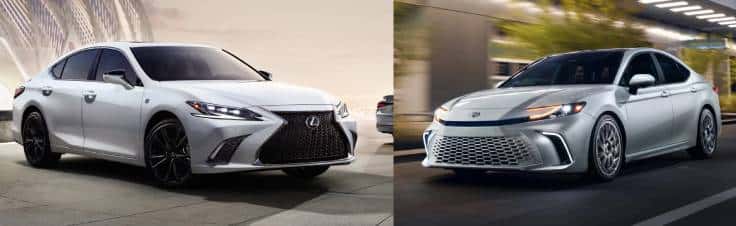
Put the 2026 Lexus ES and 2026 Toyota Camry side by side, and you’ll see how two sedans built on the same platform can take wildly different paths. One focuses on serenity and premium comfort; the other prioritizes practicality and fuel efficiency. Your choice boils down to whether you want luxury refinement or smart value.
The 2026 Lexus ES vs 2026 Toyota Camry: Shared Platform, Different Philosophies
When you’re shopping for a midsize sedan, the 2026 Lexus ES vs 2026 Toyota Camry comparison keeps coming up. Both cars share Toyota’s TNGA-K platform, so they’re literally built on the same foundation. The platform connection explains why you’ll find similar drivetrain options and structural elements in both sedans. Everything above that foundation tells a different story. Lexus engineers the ES for elevated refinement, premium materials, and sophisticated technology that transforms your daily commute into something more peaceful. The Camry takes that same platform and optimizes it for practical value, lighter weight, and straightforward functionality.
Think of it as two branches growing from the same tree. The TNGA-K architecture provides solid bones, but the ES adds 50-250 lbs of sound-deadening materials, premium insulation, and chassis tweaks that prioritize quietness over pure efficiency. The Camry stays lighter, which helps acceleration and fuel economy. Neither approach is wrong (they just serve different priorities).
If you’re driving around Oklahoma City and want luxury refinement plus a more prestigious ownership experience, the ES makes more sense. For pure value and efficiency metrics, the Camry delivers excellent transportation at a lower price.
Exterior Design: Refined Elegance Meets Mainstream Appeal
The exterior design shows where these philosophies first become obvious. The ES features Lexus’s signature spindle grille with intricate mesh patterns, flowing character lines, and sophisticated lighting that conveys an upscale presence. The design language emphasizes elegance and visual refinement. Chrome accents and carefully sculpted surfaces catch light beautifully.
The Camry goes for a more athletic, mainstream look. Its design targets broad appeal with sporty proportions and bold styling cues. While visually striking, it speaks to a different audience wanting contemporary style without luxury pretensions.
Both sedans look modern and well-proportioned. The ES carries itself with quiet confidence that signals premium positioning. Park them side by side and the differences jump out in the details: the ES uses higher-quality exterior trim, more complex lighting elements, and subtler design touches that reward closer inspection.
Interior Comfort and Craftsmanship
Lexus ES Interior: Elevated Luxury and Premium Materials
Step inside the Lexus ES interior and you’ll feel the difference immediately. The cabin uses genuine leather seating surfaces, faux bamboo trim that adds organic warmth, and ambient lighting that transforms the atmosphere from functional to sophisticated. Every touchpoint feels deliberately premium, from soft-touch dashboard materials to precisely damped controls.
The interior prioritizes serenity. Lexus has invested heavily in noise reduction technology, applying sound-deadening materials throughout the cabin and engineering tight panel gaps that minimize wind noise. The result? A mobile sanctuary, especially during highway cruising. The seats offer exceptional comfort with available heating, ventilation, and power adjustments to help you find your ideal driving position.
A 14-inch infotainment display anchors the dashboard, providing intuitive access to navigation, audio, and vehicle settings. Thoughtful details like soft-close doors, genuine stitching patterns, and a level of fit-and-finish that reflects Japanese craftsmanship traditions complete the experience.
Toyota Camry Interior: Practical Quality at a Lower Price Point
The Camry’s interior delivers quality materials within a more practical framework. Toyota focuses on durable surfaces, straightforward ergonomics, and user-friendly technology. The cabin feels spacious and well-organized, with clear sightlines and intuitive control placement that makes everything easy to use.
Higher Camry trims include a 12.3-inch infotainment display that provides solid functionality. The materials feel appropriate for the price point, emphasizing durability over luxury appeal. You won’t find ambient lighting or faux bamboo accents, but the Camry offers clean design and comfortable seating that handles daily transportation needs effectively.
The Camry’s trunk provides roughly 15 cubic feet of cargo space, slightly edging out the ES due to the latter’s additional sound insulation materials. For buyers wanting maximum practicality, this is a real advantage.
Technology, Infotainment, and Lexus ES Features
Premium Features Exclusive to the Lexus ES
Technology differences become clear when comparing the Lexus ES features against the Camry’s offerings. The ES’s 14-inch display provides a larger, more immersive interface for navigation and entertainment. The system responds quickly and integrates seamlessly with smartphone connectivity, making it easy to access your preferred apps and services.
Beyond screen size, the ES offers premium audio systems that transform the cabin into a concert hall. Available Mark Levinson audio delivers exceptional sound quality that makes every drive more enjoyable. Advanced climate control systems maintain precise temperature zones, keeping both driver and passengers comfortable regardless of weather conditions.
The ambient lighting system lets you customize the cabin atmosphere, with multiple color options that adapt to your mood or time of day. These features might seem small individually, but together they create an environment that feels distinctly more sophisticated than mainstream alternatives.
Standard Connectivity and Infotainment Compared
Both vehicles include Apple CarPlay and Android Auto integration, wireless smartphone charging, and Bluetooth connectivity. The Camry’s system works well for everyday tasks, providing reliable access to navigation, music streaming, and hands-free calling. Its interface design prioritizes simplicity, making it immediately accessible to drivers of all technical comfort levels.
The ES takes these basics and enhances them with faster processors, more intuitive menu structures, and premium touches like higher-resolution displays. Both systems get you where you need to go; the ES just makes the journey feel more refined.
Performance, Powertrain, and Lexus ES MPG
Engine Options and Driving Dynamics
Both sedans offer hybrid powertrains built around a 2.5L four-cylinder engine paired with electric motors. The Camry delivers 225 hp in FWD configuration or 232 hp with AWD. These numbers provide adequate acceleration, and the Camry’s lighter weight helps it feel nimble during spirited driving.
The ES uses a similar hybrid architecture but tunes everything for refinement over sportiness. The dual electric motor AWD option enhances chassis rigidity while providing confident all-weather capability. Lexus has calibrated the Lexus ES performance powertrain to deliver seamless, hushed power delivery that never feels harsh or intrusive.
The Camry’s lighter construction gives it a slight edge in outright acceleration. However, ES performance philosophy prioritizes smooth, linear power delivery and exceptional noise isolation. During highway merging or passing maneuvers, the ES feels effortless and composed, insulating occupants from powertrain noise that might intrude in less refined vehicles.
Fuel Economy and Hybrid Efficiency
Here’s where we’ll acknowledge a genuine Camry advantage: the Lexus ES MPG figures trail slightly behind the Camry’s efficiency numbers. Toyota’s lighter weight directly translates to better fuel economy, making the Camry more economical for drivers who rack up serious annual mileage.
Both vehicles deliver respectable hybrid efficiency that reduces fuel costs compared to traditional gas engines. The Camry simply edges ahead due to its weight advantage and efficiency-focused tuning. If you’re prioritizing maximum MPG, this is a legitimate consideration.
But the ES’s modest efficiency trade-off buys substantial refinement gains. The additional weight comes from sound insulation, premium materials, and chassis reinforcements that create a noticeably quieter, more composed driving experience. It’s a trade-off worth considering based on your priorities.
Safety Technology and Driver Assistance
Both vehicles include comprehensive driver assistance systems: adaptive cruise control, lane-keeping assist, automatic emergency braking, and blind-spot monitoring. These technologies work effectively in both sedans, providing confidence-inspiring Lexus ES safety features that reduce driver fatigue during long trips.
The Camry earned stronger IIHS crash test ratings overall, achieving Good scores in moderate front offset and side impact tests. This is a genuine safety advantage that deserves acknowledgment. Toyota’s engineering focused intensely on crash protection, and the results speak clearly.
The ES received Acceptable or Marginal ratings in some IIHS categories. While the ES still provides excellent protection and scored well in many tests, the Camry’s structural performance gives it an edge in this specific metric. Both vehicles meet rigorous safety standards, but if you prioritize top crash test scores, weigh this factor carefully.
| Specification | 2026 Lexus ES (US, hybrid‑focused) | 2026 Toyota Camry (US, hybrid) |
| Powertrain | 2.5L I‑4 hybrid with dual electric motors (ES 350h), 243 hp, CVT | 2.5L I‑4 hybrid with electric motor; 225 hp (FWD) or 232 hp (Electronic On‑Demand AWD) |
| Drivetrain options | FWD or electronic AWD available on ES 350h | FWD standard; Electronic On‑Demand AWD available on select hybrid trims |
| Infotainment display | 14‑inch central touchscreen with latest Lexus Interface; 12.3‑inch digital cluster | 8‑inch touchscreen standard; 12.3‑inch touchscreen on higher trims |
| Interior materials | NuLuxe or leather upholstery, 3D‑printed faux‑bamboo/wood‑style trim, ambient lighting on upper trims | Cloth standard; SofTex or leather‑trimmed seats and soft‑touch materials on higher trims |
| Trunk space | Around 14 cu ft class; slightly less usable volume/opening than Camry | 15.1 cu ft trunk (EPA cargo volume) |
| Weight | Roughly 3,700–3,900 lb curb for ES 350h; typically ~200–400 lb heavier than comparable Camry hybrid | Around 3,494 lb curb weight for common hybrid trims |
Why the 2026 Lexus ES Delivers the Superior Driving Experience
After presenting both vehicles honestly, including areas where the Camry excels, the 2026 Lexus ES vs 2026 Toyota Camry comparison ultimately favors the ES for buyers seeking elevated daily luxury.
Cabin Quietness That Reduces Daily Driving Fatigue
The shared TNGA-K platform gives both vehicles solid foundations, but what Lexus builds on that foundation transforms the ownership experience. Noise reduction engineering creates a cabin environment that feels genuinely serene, even during highway driving around Oklahoma City’s busier corridors. That quietness reduces fatigue and makes every journey more relaxing.
Interior Quality That Feels Truly Premium
The premium interior materials, ambient lighting, and superior fit-and-finish create an environment you’ll actually look forward to spending time in. While the Camry provides comfortable transportation, the ES turns routine commutes into something more rewarding. The larger 14-inch display, premium audio options, and thoughtful luxury details justify the ES positioning for buyers who value refinement.
A More Refined Ownership Experience Overall
Yes, the Camry offers better fuel economy and stronger crash test ratings. These are real advantages for specific buyer priorities. But the ES delivers a more prestigious ownership experience, superior materials quality, and a level of refinement that the Camry simply can’t match at any trim level.
The decision comes down to your priorities. If maximum efficiency and top safety scores drive your choice, the Camry deserves serious consideration. But if you value comfort, quietness, premium materials, and the satisfaction of driving something genuinely luxurious, the ES is the clear choice.
Discover the 2026 Lexus ES at Eskridge Lexus of Oklahoma City
Ready to experience the 2026 Lexus ES firsthand? Visit Eskridge Lexus of Oklahoma City for a personalized consultation and test drive. The team can answer specific questions about the ES hybrid, explain differences between trim levels, and help you explore all available features in detail.
Located at 700 West Memorial Road, they provide comprehensive services including new vehicle sales, certified pre-owned options, financing assistance, and ongoing maintenance support. Contact their sales team at (405) 755-9000 to schedule your test drive and discover why the ES represents the superior choice for luxury sedan buyers.
The comparison between these shared-platform sedans reveals clear philosophical differences. Once you experience the ES’s refined driving dynamics, premium cabin environment, and sophisticated technology, you’ll understand why it justifies its positioning as the luxury choice. Visit today and discover the difference yourself.
0 comment(s) so far on 2026 Lexus ES vs 2026 Toyota Camry